Yukon
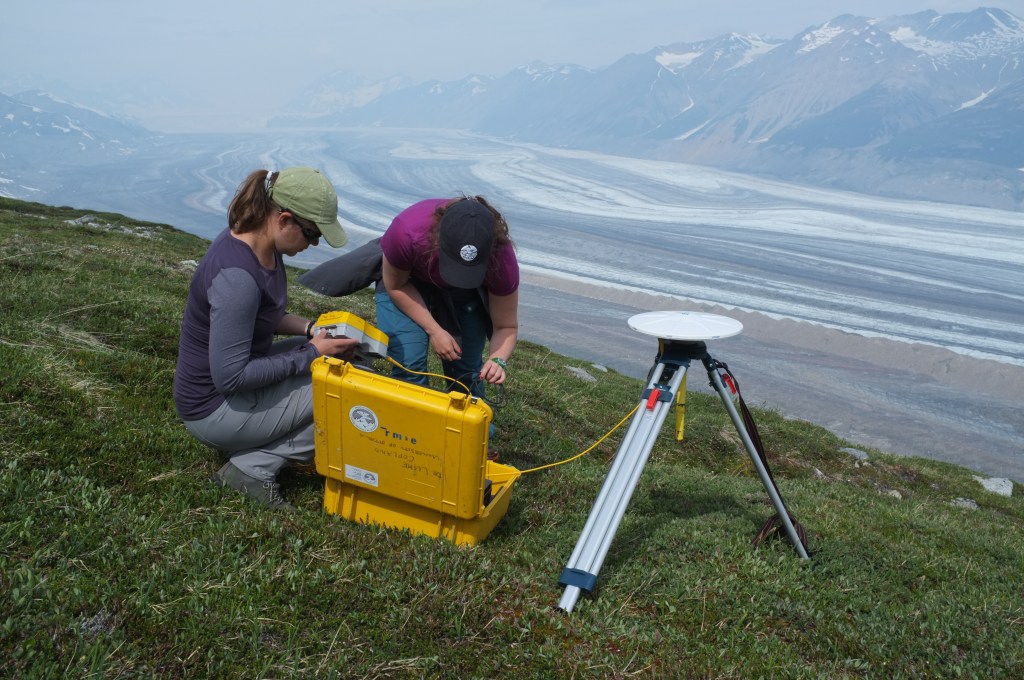
Surge-type glaciers are fascinating systems that flow down-valley at a sedate rate for several years then dramatically advance forward rapidly (at 100s of meters a year!). We still don’t know exactly what causes this dynamic behavior and to investigate we have a field site in the St. Elias Mountains of the Yukon where there are both surge-type and ‘normal’ glaciers. Surging glaciers can cause hazards in this region by forming large pro-glacial lakes that can flood down valley and part of our research is to assess the extent of these hazards.
We collect data including weather (see our weather station data uploaded by satellite here): ice velocity using GPS systems and timelapse cameras, and conditions of the interior and base of the ice using a hot water borehole drill. We apply these data to surface energy mass balance models (e.g. see) surface hydrology mapping and basal hydrology using subglacial models.
Canadian Arctic Archipelago
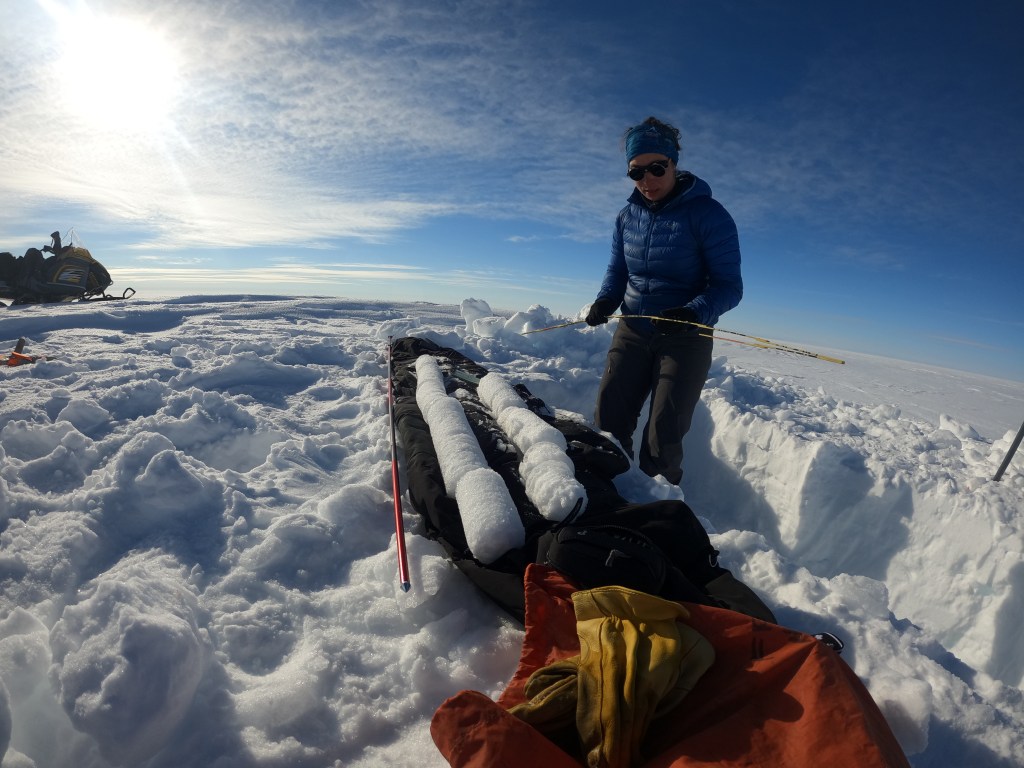
The Canadian High Arctic contains one of the largest areas of glaciated terrain in the world, and the work that the UW Glaciology team does within this region helps us to understand how Canada’s glaciers are responding to a changing Arctic climate.
Our main areas of research within the Canadian Arctic focus on measuring how the speed of ice motion vary in time and space and understanding why these variations happen. In addition, the research team contributes to observing changing glacier geometries, melt and mass balance conditions within the region. To do this, we use a combined approach of field based studies on glaciers and cutting-edge analysis of satellite imagery and work with a large number of national (Environment and Climate Change Canada, Natural Resources Canada) and international organizations (German Aerospace Center) to do this work.
Antarctica
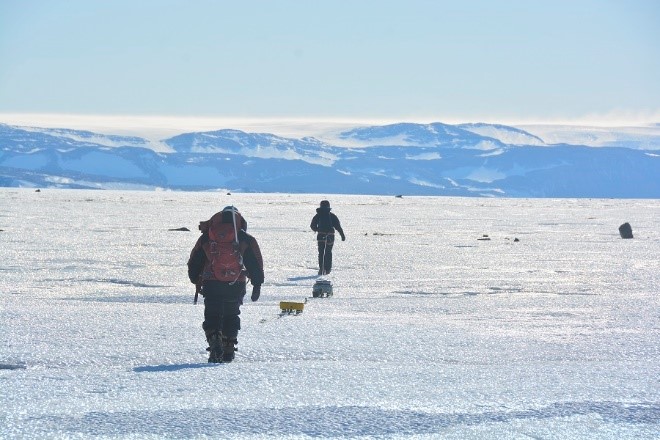
Antarctica holds vast quantities of ice that have the potential to raise global sea levels by tens of meters. Our research focus in Antarctica can be generally separated into 1) examination of subglacial hydrology and 2) ice shelf stability.
We apply the Glacier Drainage System (GlaDS) subglacial hydrology model to catchments in the Antarctica to investigate the role of basal water in ice dynamics at paleo, current and future timescales. We are also interested in the interaction of this basal water as it crosses over the grounding line into the ocean where it can impact ice shelf melt rates.
Ice shelves are key for holding back ice on land and restricting global sea level rise. We are investigating melt rates and channel formation in these key ice bodies and how changes in ocean and subglacial conditions over time can impact ice shelf fracture rates (e.g. see). Previous fieldwork in East Antarctica has included the collection of radar data on Nansen Ice Shelf, Terra Nova Bay.
 University of Waterloo Glaciology